
Plants & ecology · Ingredients & materials · Skin & hair
Chamomile
German chamomile, Matricaria chamomilla · Aster family (Asteraceae)
Delicate, apple-scented flower heads used for generations in herbal teas, aromatic baths, and preparations for the skin.
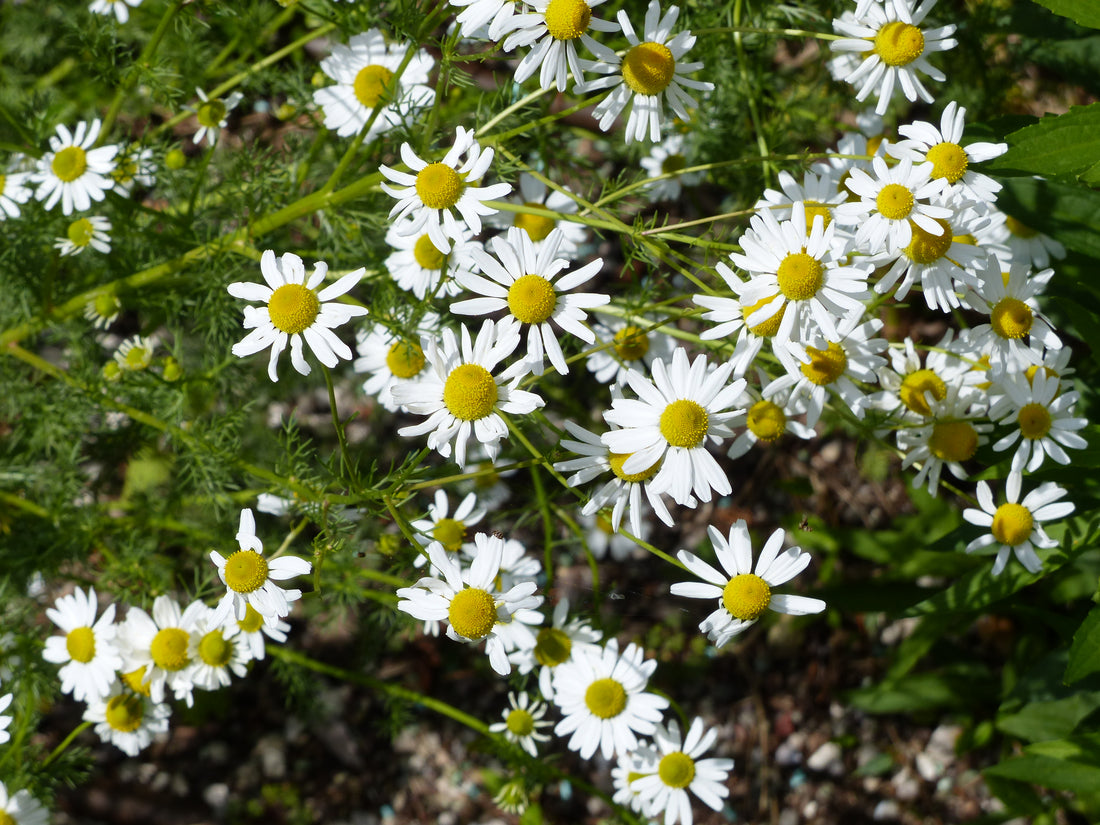
Chamomile is one of the most familiar aromatic herbs in European herbalism, recognizable by its small white flowers with yellow centers and its soft, apple-like fragrance. The name most often refers to German chamomile, Matricaria chamomilla, but another plant, Roman chamomile, Chamaemelum nobile, shares many of its traditional uses.
Both belong to the aster family, though they differ in growth habit, aromatic chemistry, and botanical identity.
Two kinds of chamomile
German chamomile is an annual herb with finely divided leaves and flower heads that develop a raised yellow center as they mature. Roman chamomile is a low-growing perennial with a more spreading habit.
Both are cultivated for their fragrant flowering heads, but their aromatic materials are not interchangeable. German chamomile is especially associated with sesquiterpenes such as bisabolol, while Roman chamomile essential oil has a characteristically different composition.
The distinction matters in herbal preparations and perfumery, where the species and the part of the plant used help determine the character of the finished material.[1, 2]
Herbal actions and traditional uses
Chamomile has a long history as a carminative, an aromatic herb traditionally prepared to ease digestive discomfort, and as a nervine associated with rest and relaxation.[3]
German chamomile flowers have been steeped in teas, incorporated into baths, and used in washes and compresses for the skin. European herbal practice has also employed chamomile preparations for irritated mucous membranes and minor skin complaints.[1]
The chemistry of the flowers
German chamomile contains aromatic sesquiterpenes, including α-bisabolol and related bisabolol oxides, as well as the sesquiterpene lactone matricin.
During steam distillation, matricin can transform into chamazulene, a blue-colored compound responsible for the characteristic color of some German chamomile essential oils. The dried flowers themselves are not blue, making this a particularly interesting example of how processing can change an aromatic material.[2, 4]
The flowers also contain flavonoids, notably apigenin and its glycosides, alongside other phenolic compounds. These have attracted scientific interest for their antioxidant properties and interactions with biological processes involved in inflammation.[4]
Together, the aromatic and nonvolatile constituents help explain chamomile's longstanding place in herbal preparations.
At Deschampsia
We grow chamomile in our garden on Vashon Island, gathering the flowers repeatedly through the growing season and drying them for later use in botanical infusions.
Chamomile is part of the whole-flower infusion in Eye Serum | Botanical Roll-On, alongside calendula, rose and green tea.
Chamomile flowers join rose, yarrow, fireweed, elderflower, and Douglas fir tips in the slow botanical infusion for Glow Serum.
It also appears in Dream Balm, where its traditional association with evening herbal preparations complements mugwort, hops and passionflower.
Photograph: Andrea Moro · CC BY-SA 3.0 license.

Explore the products
Suero para ojos | Roll-on botánico →Suero floral brillante →Bálsamo de ensueño →Related Field Notes
Following the Summer Harvest at Deschampsia
Our account of cultivating, gathering, drying and storing garden-grown chamomile and calendula.
Sources
[1] European Medicines Agency — Matricaria Flower. German chamomile preparations and traditional herbal uses.
[2] European Medicines Agency — Roman Chamomile Flower. Distinct botanical identity of Roman chamomile.
[3] NCCIH — Chamomile: Usefulness and Safety. Herbal history and clinical evidence.
[4] United States Pharmacopeia — Chamomile Monograph. Flower identity and characteristic constituents.